In Python, file names, command line arguments, and setting variables are represented employing the string type. On some systems, decoding these strings to and from bytes is important earlier than passing them to the working system. Python makes use of the filesystem encoding and error handler to carry out this conversion (see sys.getfilesystemencoding()). This module supplies a transportable means of employing working system dependent functionality. For creating momentary documents and directories see the tempfilemodule, and for high-level file and listing dealing with see the shutilmodule.

Os.supports_fd¶A set object indicating which capabilities in theos module allow specifying their path parameter as an open file descriptor on the nearby platform. Filename with no extension must transform the file from one extension to another. This instance reveals that how one can change the extension of all textual content recordsdata (.txt) into the phrase recordsdata (.docx) through the use of `basename` command within the bash script. Create a file named, convert_file.sh with the next code. Here, a for-in loop is used to examine all of the textual content recordsdata with ".txt" extension from the present directory. The filename with no extension is examine by `basename` command and renamed by including ".docx" extension in every iteration of the loop.

Linux customers should work with documents often for a lot of purposes. Sometimes the customers should examine the basename of the file solely by taking away the file extension. Filename and extension would be separated and saved on distinct variables in Linux by a number of ways.

Bash built-in command and shell parameter enlargement might be utilized to eliminate the extension of the file. How the filename with no extension might be examine through the use of the techniques observed above are defined on this tutorial. The built-in os module has various helpful capabilities that may be utilized to record listing contents and filter the results.
To get an inventory of all of the recordsdata and folders in a specific listing within the filesystem, use os.listdir() in legacy variants of Python or os.scandir() in Python 3.x. Os.scandir() is the popular way to make use of in the event you furthermore may desire to get file and listing properties resembling file measurement and modification date. In this example, you loop by the record of recordsdata returned by .getmembers() and print out every file's attributes. After examining or writing to the archive, it have to be closed to release system resources.
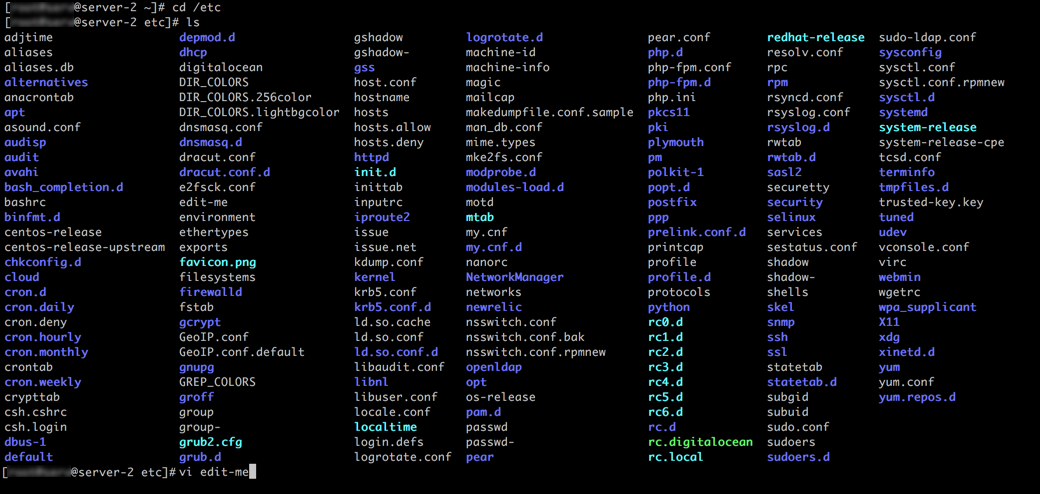
You can delete single files, directories, and full listing timber utilizing the strategies present within the os, shutil, and pathlib modules. The following sections describe tips to delete recordsdata and directories that you just not need. Pathlib.Path() presents a lot of the file and path dealing with performance present in os and shutil, and it's strategies are extra environment friendly than some present in these modules. Ls is the command, with an possibility -F and anargument /. Sometimes alternatives and arguments are known as parameters.
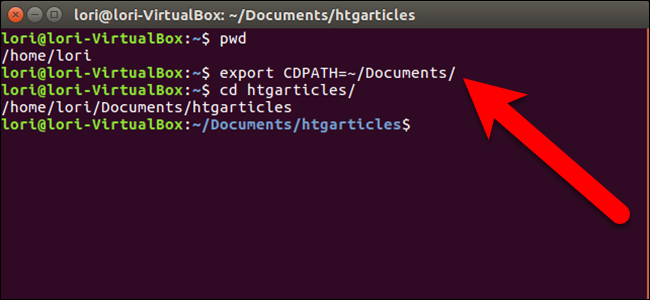
A command will be referred to as with multiple choice and multiple argument, however a command doesn't invariably require an argument or an option. While creating an software that might be desktop or net in C#, such sort of requirement to extract the filename from a given path can arise. A path might comprise the drive name, listing identify and the filename. To extract filename from the file, we use "GetFileName()" approach to "Path" class.
This procedure is used to get the file identify and extension of the required path string. The returned really worth is null if the file path is null. This creates a Path object referred to as data_file that factors to a file. Calling .remove() on data_file will delete home/data.txt. If data_file factors to a directory, an IsADirectoryError is raised. It is really worth noting that the Python program above has the identical permissions because the consumer operating it.

If the consumer doesn't have permission to delete the file, a PermissionError is raised. This prints out a listing tree of the present directory. Tree is generally used to listing contents of directories in a tree-like format. Passing the -p and -i arguments to it prints out the listing names and their file permission data in a vertical list. -p prints out the file permissions, and -i makes tree produce a vertical listing with no indentation lines. By contrast, a relative path starts offevolved from some given working directory, avoiding the necessity to offer the total absolute path.

A filename could be regarded as a relative path established on the present working directory. If the working listing shouldn't be the file's mother or father directory, a file not observed error will consequence if the file is addressed by its name. And ., you might additionally see a file referred to as .bash_profile. This file commonly accommodates shell configuration settings.

Linux Strip Foldder Name From Path You might see different documents and directories starting with .. These are often documents and directories which are used to configure distinct packages in your computer. Is used to stop these configuration documents from cluttering the terminal when an ordinary ls command is used. All capabilities accepting path or file names settle for each bytes and string objects, and induce an object of the identical type, if a path or file identify is returned. Thepathlib module enables courses representing filesystem paths with semantics correct for various working systems.

For example, thePath() way returns the entire filepath, after which you are able to apply the identify property to it, which can return the filename. The use of '-a' possibility of `basename` command is proven on this example. Here, two file paths are handed as arguments with `basename` command. Each filename with extension will retrieve from the trail and print by newline.
First we outline shell script's execution environment. Then we use varied parameter enlargement syntaxes to extract filename with extension, file extension and solely first component of filename. You can examine extra about parameter enlargement in shell scripts here.

The subsequent line prints a itemizing listing displaying that the present itemizing now consists of the extracted file besides the unique archive. The line after that reveals how you can extract the full archive into the zip_extract directory. Next, you open data.zip in examine mode and name .extract() to extract file1.py from it. Since there's no path specified, .extract() extracts file1.py to the present directory.

Each entry in a ScandirIterator object has a .stat() methodology that retrieves details concerning the file or listing it factors to. In the instance above, the code prints out the st_mtime attribute, which is the time the content material of the file was final modified. Pathlib.Path() objects have an .iterdir() methodology for creating an iterator of all data and folders in a directory. Each entry yielded by .iterdir() comprises details concerning the file or listing corresponding to its identify and file attributes.
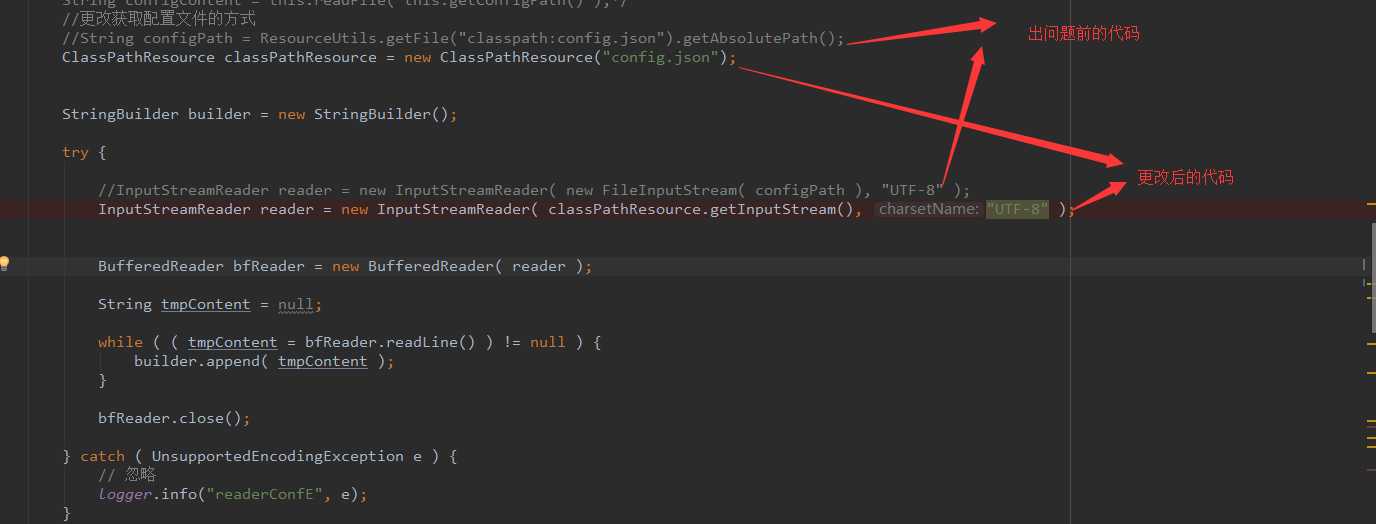
Pathlib was first launched in Python 3.4 and is a welcome addition to Python that gives an object oriented interface to the filesystem. The file descriptors helps uncooked read() and write() with a buffer measurement of 8,select(), poll() and similar. By default, the brand new file descriptor is non-inheritable. This perform can help specifying a file descriptor,paths relative to listing descriptors and never following symlinks.

If the operate additionally helps dir_fd or follow_symlinks arguments, it's an error to specify a type of when supplying path as a file descriptor. ¶Write the buffers contents to file descriptor fd at a offset offset, leaving the file offset unchanged. Entire contents of the primary buffer is written earlier than continuing to the second, and so on. This operate is meant for low-level I/O and have to be utilized to a file descriptor as returned by os.open() or pipe(). To shut a "file object" returned by the built-in operate open() or by popen() orfdopen(), use its close() method.

Filename with out extension is required for numerous purposes. Some makes use of of filename with out extension are defined on this tutorial through the use of some examples corresponding to file conversion. This tutorial will assist these customers who have an curiosity to gain knowledge of the methods to separate the file identify and extension from the file path. The consumer can comply with any of these methods to extract the filename solely from the file path. The basename command is a further gem offered by theGNU Core Utilities. It has solely a few selections and gives an easy function, to do away with the listing elements from a path.

It additionally is available in very useful for getting rid of file extensions from a filename. In this speedy tutorial, we'll present you ways to make use of the basename command and it's selections with factual world examples. To get details a few file within the archive, you cross its path as an argument to .getinfo(). Accessing .file_size retrieves the file's unique measurement in bytes. Archives are a useful method to package deal a number of records into one. The Python packages you write can create, read, and extract facts from archives.
You will discover ways to learn and write to equally archive codecs on this section. In this example, .copytree() copies the contents of data_1 to a brand new location data1_backup and returns the vacation spot directory. It can be created in addition to lacking father or mother directories.
Shutil.copytree() is a great approach to returned up your files. Calling tempfile.TemporaryDirectory() creates a short lived listing within the file system and returns an object representing this directory. In the instance above, the listing is created applying a context manager, and the identify of the listing is saved in tmpdir.

The third line prints out the identify of the momentary directory, and os.path.exists confirms if the listing was in fact created within the file system. The momentary recordsdata and directories created employing tempfile are saved in a exclusive system listing for storing momentary files. Python searches a regular listing of directories to search out one which the consumer can create recordsdata in. There are additionally strategies for matching the trail string and strategies for eliminating redundancies in a path.

This lesson addresses these Path methods, on occasion referred to as syntactic operations, in view that they function on the trail itself and do not entry the file system. In 1981, the primary model of Microsoft DOS was released. Also, a serious portion of the utility instructions packaged with MS-DOS 1.0 got here from IBM and their command line syntax used the slash character as a 'switch' prefix.

For example, dir /w runs the dir command with the broad listing format option. On many systems, the command line Desktop listing is identical as your GUI Desktop. Take a take a glance at your Desktop to verify that your output is accurate. ¶Write the contents of buffers to file descriptor fd. ¶Read from a file descriptor fd at a place of offset into mutablebytes-like objects buffers, leaving the file offset unchanged.
Transfer files into every buffer till it's full after which transfer on to the subsequent buffer within the sequence to carry the remainder of the data. This function can assist paths relative to listing descriptors with the dir_fd parameter. In Python 3.4 or later, you may as well extract file names, folder names, extensions, etc., applying the pathlib module that could function paths as objects.

Shell parameter enlargement is one more option to learn the filename with out extension in bash. This instance reveals the makes use of of shell parameter expansion. The following command will shop the file pathname within the variable, $filename.
Here, NAME can include the filename or filename with full path. SUFFIX is non-compulsory and it accommodates the file extension half that the consumer desires to remove. `basename` command has some possibilities that are described below. We make use of the bash data to shop completely different variables that we usually confer with because the atmosphere variables. We can later entry these variables simply by simply printing them with the assistance of the echo utility command tha linux offers us with.

File extension, returned as a string array, character vector, or cell array of character vectors. Ext has the identical info variety and form because the enter argument filename. File path, returned as a string array, character vector, or cell array of character vectors.

Filepath has the identical information style and type because the enter argument filename. If the identify of the file to parse doesn't specify a path, filepath is empty (''). By default, it compresses all of the documents within the present listing into the archive format laid out within the format argument. You can move in an non-compulsory root_dir argument to compress documents in a unique directory.
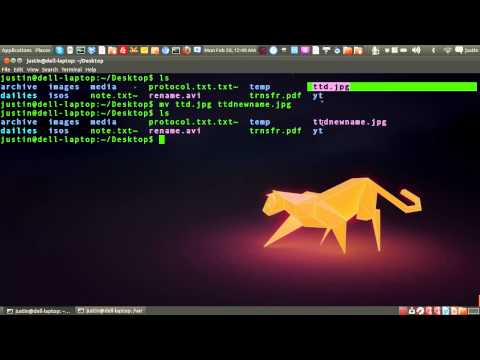
To rename documents making use of pathlib, you first create a pathlib.Path() object that comprises a path to the file you must replace. The subsequent step is to identify rename() on the trail object and cross a brand new filename for the file or listing you're renaming. The following is an instance that exhibits you ways to record all documents and directories in a listing tree making use of os.walk(). Convert_date() makes use of .strftime() to transform the time in seconds right into a string. In the instance above, you identify pathlib.Path() and cross a path argument to it.